Choreography, costume, lighting: Martha Graham.
Dancer: Martha Graham and her Group.
Music: Louis Horst.
Premiere: Maxine Craig Theatre, New York, February 2nd, 1931.
Photographs: click here, here, here, here, here.
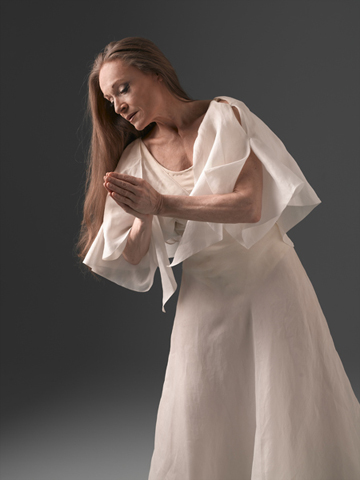
Primitive Mysteries is a group work inspired by the Virgin Mary. Divided into three parts, 'Hymn to the Viring', 'Crucifixus' and 'Hosannah', it portrays crucial episodes from the Bible, such as the cucifixion and deposition of Christ, as experienced by the Virgin. The movement quality of the piece is very spare and minimal, with the Virgin often moving from a pose to another as in a tableau vivant. She is the core of the piece, even when she stands completely still, as in a part of section two. Her costume is made of white organdy and consists of a wide skirt that poetically floats as she moves, while the one of the Group is blue and its skirt is not as wide. The Group surrounds the Virgin and, in more than one case, moves in smaller groups of two, three or four. One of the most significant aspects of the choreography is the processional walk done at the beginning and end of each section. It is done in unison by all the dancers and in complete silence, so as to create the sacred atmosphere of the piece. The title, as well as the idea for this dance, came from Graham's study of Native American cultures in the North American Southwest.
Here the link to my interview to Susan Sentler who has reconstructed the piece, in more than one occasion, for the historical project at Laban.
--
Coreografia, costume, luci: Martha Graham.
Danzatrice: Martha Graham e il suo Group (gruppo).
Musica: Louis Horst.
Prima rappresentazione: Maxine Craig Theatre, New York, 2 febbraio, 1931.
Fotografie: cliccare qui, qui, qui, qui, qui.
Primitive Mysteries è una danza di gruppo ispirata alla Vergine Maria. Divisa in tre parti, 'Hymn to the Viring', 'Crucifixus' and 'Hosannah', ritrae degli aspetti cruciali della Bibbia, come la crocifissione e deposizione di Cristo, vissuti dal punto di vista della Vergine. La qualità del movimento del pezzo è semplice e minimale, con la Vergine che si muove da una posa all'altra come in un tableau vivant. Ella è il cuore del pezzo, anche quando resta completamente ferma per una parte della seconda sezione. Il suo costume è fatto di organza bianca e si sviluppa in un'ampia gonna che fluttua poeticamente durante i suoi movimenti, mentre quello del Group è blu e la sua gonna non è così ampia. Il Group circonda la Vergine e in più di un'occasione si sposta in gruppi più piccoli di due, tre o quattro persone.
Uno degli aspetti più significativi della coreografia è la camminata processionale fatta all'inizio e fine di ogni sezione. Viene eseguita all'unisono da tutte le danzatrici e in completo silenzio, in modo da creare l'atmosfera sacra del pezzo. Il titolo e l'idea della danza provengono dallo studio che Graham fece delle cutlure native americane del sudovest nordamericano.
Qui il link alla mia intervista (in inglese) a Susan Sentler che ha ricostruito il pezzo in più di un'occasione per l'historical project presso il Laban.
Visualizzazione post con etichetta martha graham's dances. Mostra tutti i post
Visualizzazione post con etichetta martha graham's dances. Mostra tutti i post
sabato 19 febbraio 2011



martedì 28 settembre 2010
lamentation (1930)
Choreography, costume, lighting: Martha Graham.
Dancer: Martha Graham.
Music: Zoltan Kodaly.
Premiere: Maxine Elliott's Theatre, New York, January 8th, 1930.
Video: click here (fragments of the piece performed by Graham) and here (the 1976 perfomance with Peggy Lyman).
Photographs: click here, here, here and here.
Lamentation is not a piece about a suffering woman, but about the notion of pain. It is a very minimal solo work, as the dancer mainly sits on a bench, slightly moving her torso. The extraordinary aspect of Lamentation is the costume, which fundamentally contributes to giving shape to the choreography. It consists of a tubular purple fabric, originally made of wool, now made of lycra. It covers the dancer's body, except for her face, neck, hands and feet. As she moves, it draws lines that connect parts of her body, thus creating the dynamic tension of the work.
Here is the link to another analysis I made, based on important dates related to the piece.
-
Coreografia, costume, luci: Martha Graham.
Danzatrice: Martha Graham.
Musica: Zoltan Kodaly.
Prima rappresentazione: Maxine Elliott's Theatre, New York, 8 gennaio 1930.
Video: cliccare qui (frammenti del pezzo in cui danza Graham) e qui (la performance di Peggy Lyman del 1976).
Fotografie: cliccare qui, qui, qui e qui.
Lamentation non ha a che fare con una donna sofferente, ma con l'idea del dolore. E' un assolo molto minimale, in quanto la danzatrice sta soprattutto seduta e muove leggermente il torso. L'aspetto straordinario di Lamentation è il costume, che contribuisce in modo fondamentale a plasmare la coreografia. Consiste in un tubo di stoffa lilla, originariamente fatto di lana, ora di licra. Copre il corpo della danzatrice, ad eccezione per faccia, collo, mani e piedi. Nel momento in cui ella si muove, disegna linee che connettono parti del corpo in modo da creare la tensione dinamica del pezzo.
Qui il link ad un'altra analisi (in ingelse) che ho fatto a partire da date importanti collegate all'assolo stesso.
(Traduzione in italiano inserita il 30 ottobre 2010).
Dancer: Martha Graham.
Music: Zoltan Kodaly.
Premiere: Maxine Elliott's Theatre, New York, January 8th, 1930.
Video: click here (fragments of the piece performed by Graham) and here (the 1976 perfomance with Peggy Lyman).
Photographs: click here, here, here and here.


Lamentation is not a piece about a suffering woman, but about the notion of pain. It is a very minimal solo work, as the dancer mainly sits on a bench, slightly moving her torso. The extraordinary aspect of Lamentation is the costume, which fundamentally contributes to giving shape to the choreography. It consists of a tubular purple fabric, originally made of wool, now made of lycra. It covers the dancer's body, except for her face, neck, hands and feet. As she moves, it draws lines that connect parts of her body, thus creating the dynamic tension of the work.
Here is the link to another analysis I made, based on important dates related to the piece.
-
Coreografia, costume, luci: Martha Graham.
Danzatrice: Martha Graham.
Musica: Zoltan Kodaly.
Prima rappresentazione: Maxine Elliott's Theatre, New York, 8 gennaio 1930.
Video: cliccare qui (frammenti del pezzo in cui danza Graham) e qui (la performance di Peggy Lyman del 1976).
Fotografie: cliccare qui, qui, qui e qui.
Lamentation non ha a che fare con una donna sofferente, ma con l'idea del dolore. E' un assolo molto minimale, in quanto la danzatrice sta soprattutto seduta e muove leggermente il torso. L'aspetto straordinario di Lamentation è il costume, che contribuisce in modo fondamentale a plasmare la coreografia. Consiste in un tubo di stoffa lilla, originariamente fatto di lana, ora di licra. Copre il corpo della danzatrice, ad eccezione per faccia, collo, mani e piedi. Nel momento in cui ella si muove, disegna linee che connettono parti del corpo in modo da creare la tensione dinamica del pezzo.
Qui il link ad un'altra analisi (in ingelse) che ho fatto a partire da date importanti collegate all'assolo stesso.
(Traduzione in italiano inserita il 30 ottobre 2010).
domenica 19 settembre 2010
heretic (1929)
Choreography, costumes and lighting: Martha Graham.
Dancers: Martha Graham and her Group of female dancers.
Music: Old Breton song, 10 bars long, repeated throughtout the dance.
Premiere: Booth Theatre, New York, April 14th, 1929.
Video: click here.
Photographs: click here, here and here.
Heretic is the first important group work Martha Graham created in her career. In particular, it is the first piece through which her choreosophy (embodied choreo-knowledge) gained shape. It consists of the sharp contrast between an individual and a group. This contrast is created through two main aspects: the colour of their costumes, white for the lone protagonist and black for the group; and their movement quality, fluid for the former, and rigid, mechanical and performed in unison for the latter. The title of the piece refers to the white-dressed dancer's battle against the wall of black-dressed women, who is trying to stop her from expressing herself. These women represent the puritanical concept of art, a concept filled with denial and lack of freedom, while the heretic embodies the notion of art as freedom. It also embodies Graham's attempt to affirm her notion of dance as a serious art, as opposed to dance as pure entertainment. In the end, the heretic is defeated.
-
Coreografia, costumi e luci: Martha Graham.
Danzatrici: Martha Graham e il suo Group di danzatrici.
Musica: Vecchia canzone bretone, di 10 battute, ripetuta durante la coreografia.
Prima rappresentazione: Booth theatre, New York, 14 aprile 1929.
Video: cliccare qui (commentato in inglese).
Fotografie: cliccare qui, qui e qui.
Heretic è il primo importante lavoro di gruppo di Martha Graham. In particolare è il primo pezzo attraverso il quale la sua coreosofia (coreo-conoscenza incarnata) prese forma. E' caratterizzato dal contrasto tagliente fra un individuo e un gruppo. Questo contrasto è dato da due aspetti principali: il colore dei loro costumi, bianco per la protagonista solitaria, e nero per il gruppo; e la qualità del loro movimento, fluido per la prima e rigido, meccanico ed eseguito all'unisono per il secondo. Il titolo del pezzo fa riferimento alla battaglia che la danzatrice in bianco combatte contro il muro di donne in nero, che tenta di impedirle di esprimersi. Queste donne rappresentano il concetto puritano dell'arte, un concetto pieno di negazione e mancanza di libertà, mentre l'eretica incarna l'arte come libertà. Esso rappresenta anche il tentativo di Graham di affermare la sua nozione di danza come arte seria, in contrasto con la nozione di danza come puro intrattenimento. Alla fine, l'eretica viene sconfitta.
Dancers: Martha Graham and her Group of female dancers.
Music: Old Breton song, 10 bars long, repeated throughtout the dance.
Premiere: Booth Theatre, New York, April 14th, 1929.
Video: click here.
Photographs: click here, here and here.


Heretic is the first important group work Martha Graham created in her career. In particular, it is the first piece through which her choreosophy (embodied choreo-knowledge) gained shape. It consists of the sharp contrast between an individual and a group. This contrast is created through two main aspects: the colour of their costumes, white for the lone protagonist and black for the group; and their movement quality, fluid for the former, and rigid, mechanical and performed in unison for the latter. The title of the piece refers to the white-dressed dancer's battle against the wall of black-dressed women, who is trying to stop her from expressing herself. These women represent the puritanical concept of art, a concept filled with denial and lack of freedom, while the heretic embodies the notion of art as freedom. It also embodies Graham's attempt to affirm her notion of dance as a serious art, as opposed to dance as pure entertainment. In the end, the heretic is defeated.
-
Coreografia, costumi e luci: Martha Graham.
Danzatrici: Martha Graham e il suo Group di danzatrici.
Musica: Vecchia canzone bretone, di 10 battute, ripetuta durante la coreografia.
Prima rappresentazione: Booth theatre, New York, 14 aprile 1929.
Video: cliccare qui (commentato in inglese).
Fotografie: cliccare qui, qui e qui.
Heretic è il primo importante lavoro di gruppo di Martha Graham. In particolare è il primo pezzo attraverso il quale la sua coreosofia (coreo-conoscenza incarnata) prese forma. E' caratterizzato dal contrasto tagliente fra un individuo e un gruppo. Questo contrasto è dato da due aspetti principali: il colore dei loro costumi, bianco per la protagonista solitaria, e nero per il gruppo; e la qualità del loro movimento, fluido per la prima e rigido, meccanico ed eseguito all'unisono per il secondo. Il titolo del pezzo fa riferimento alla battaglia che la danzatrice in bianco combatte contro il muro di donne in nero, che tenta di impedirle di esprimersi. Queste donne rappresentano il concetto puritano dell'arte, un concetto pieno di negazione e mancanza di libertà, mentre l'eretica incarna l'arte come libertà. Esso rappresenta anche il tentativo di Graham di affermare la sua nozione di danza come arte seria, in contrasto con la nozione di danza come puro intrattenimento. Alla fine, l'eretica viene sconfitta.
Iscriviti a:
Post (Atom)